

Are you a math person?
Have you ever been asked this? I am not sure when this title “math person” started, but it has been a little, black rain cloud over our educational system long enough! Math is everywhere! Cooking, music, sports, the list goes on and on…
Yet, often times are students are told that they are either “math people” or they are not. As kids get older, this title follows them and sadly, by the time they are upper graders, they believe in this title too. That is why I am on a personal mission to help students ALL see themselves as “math people”.
How can we accomplish this?
Simple! Well…simple-ISH. We as educators need to be part of the change. (Now, before anyone bites my head off, I truly believe there is no such thing as a bad teaching strategy.) However, as lifelong learners, we should be constantly looking at ways to improve our practice and better reach our current students.
It is no secret that the attention span of our kids is shortening by the minute. They are constantly surrounded by second to second stimuli, sometimes starting in the first five years. Rather than complain and fight their ever-shortening attention spans, let’s try to adapt our teaching practices. (This happens to adults too by the way…How many of you are still reading this word for word? That conversation is for another day…)
In this blog post, we will dive into 5 ways we can change the way we look at math, so that our students can truly see themselves as “math people”.
Math Practice Can Be Varied
A traditional math class consists of the teacher demonstrating a few problems and then assigning students a worksheet to practice the new skill. Again, I do not believe any teaching practice is inherently BAD, but some practices can and should be revisited.
Algorithms, for example, need repetition. I do agree with this, but students can practice said algorithms in a variety of ways. For instance, I just taught the subtraction algorithm. I first introduced it by teaching the class how to play a math game. (This acted as a warm up.) I demonstrated the algorithm to the class twice and then let them play the game. I walked around, specifically looking for common misconceptions. I quickly realized that students were struggling when there was more than one 0 in the top number. That became the main chunk of my small group lesson that day. Students who had demonstrated proficiency even before the game continued playing the game while I met with the other groups who needed more support. After each group had a targeted mini-lesson with me, they first practiced the algorithm on Snorkl. (This online program coached them through any further misconceptions.) The next day, when we played the math game again during morning work, I noticed a huge improvement! It was then that I had students demonstrate their understanding on an exit ticket.
The possibilities are truly endless. Plus, variety is the spice of life, right? I try to vary the ways that students can demonstrate mastery and continue to make progress during my small group math time. Here are some of my favorites:
- Morning Work Math Games
- Halloween Math Games for Upper Grades
- Halloween Math Games for Primary Grades
- Online Programs: Zearn, Snorkl, Freckle, Byrdseed
If you want to learn more about how I run my small group math time, check out this post or listen to the podcast.
Math Centers Can Be Flexible
Station rotation is a great way to conduct small group learning, but it is NOT the only way to structure your center time. For me, I like the flexibility of teaching a group for as long as they need instruction.
I make sure that the other groups have engaging activities that last an indefinite amount of time. For example, several online programs and math games can be played for as long as time allows. These types of activities allow me to continue to teach any group for as long as needed because I know the rest of the class has enough tasks to engage them until I am ready to call the next group.
Take a look at the image below. This is an example of how I communicate what tasks each group does everyday. At the end of the day, I simply rearrange the magnets for the next day. It takes no more than five minutes!!!

Differentiation Can Be Manageable
In my next blog post, we will explore different ways to differentiate your math games, but for now, let’s review a few easy to manage ideas for differentiating your math groups. There are three main ways to differentiate:
- Pacing: One way to easily differentiate is to vary how quickly you move through the curriculum. For example, I just taught adding and subtracting multi-digit numbers. My advanced learners had already mastered addition, as deomnstrated in their pre-assessment. Therefore, I only quickly addressed subtraction. Whereas, my intervention group had one lesson on adding two-digit numbers, one lesson on adding four-digit numbers, one lesson on subtracting two-digit numbers, and one lesson on subtracting four-digit numbers. On the days I was teaching my intervention kids and not my advanced learners, my advanced kiddos were working on multi-step problems using those skills.
- Tasks: That brings me to my next way to differentiate. Differentiate the groups’ tasks themselves. For my advanced kids, they often work on applying math skills to multi-step problems or some kind of real-world situation. Those type of tasks make up the bulk of their lessons. Students who are at grade level will often play math games to continue to practice a new skill, and my intervention kiddos use our district’s intervention program. When my intervention group plays a math game, it is often one that targets math facts or place value.
- Tools: I am really going to get into this idea in my next post, so I will only lightly introduce it today. Whatever tools are being used for an activity, those tools can be leveled. Dice, for instance, can be switched out for other larger dice. (Start with 6-sided dice and work your way up to 12-sided dice or even 20-sided dice.) Make sure to follow me on Instagram @learningnprogress to learn more!


Homework Can Be Fun (or optional)
Now we are getting into the hot topics! I know homework is often debated, but I am not a huge advocate for it. I truly believe that kids should go home and just be kids. They should be given time to spend with family, go outside, and just chill.
Having said that, eventually kids will have homework. Middle school, high school, and definately by college…homework is not going anywhere! (If I am being honest, I often have homework for my job!)
Since our job is to prepare kids for future grades, homework may be a necessary evil at some point. If homework does needs to be assigned, does it have to be a worksheet? Here is how I see it…
Homework is a time to practice a skill learned earlier in class. For students who have already mastered said skill, that worksheet is now busy work. In other words, it is teaching those kids to hate math. For students who are struggling with a skill, that worksheet is now a battle. It is either a battle within themselves (thereby affecting their attitude towards math) or even worse, it is a battle at home where parents and kids are fighting to complete this worksheet. Parents either need to help struggling learners, or kids complete the work incorrectly on their own, thereby solidying their misconceptions.
So, who is this homework for?
Kids who have met a standard already? No. Kids who need extra support? No. Parents? Heck no. Teachers? Absolutely not. (We already have enough to grade.)
Here is a thought…what if we could assign homework where kids practice math skills in a fun way AND they could actually do so while spending quality time with their families/siblings/friends? Wait, there’s more! What if I told you this work did NOT need to be graded everyday?
Sounds magical, no? Check out the video below, and see for yourself. The good news is that all of these games are already prepped and ready to print. Plus, student directions and set-up are included with every game! Get the Morning Work Math Games for Upper Grades, Halloween Math Games for Upper Grades, or the Halloween Math Games for Primary Grades. More games are in the works!!! Follow me on Instagram @learningnprogress for updates on new resources, and how-to videos to learn how to play these games.
Timed Tests Can Be Altered
Now for the real spicy discussion…how can we get students to work on their math facts without timed tests?!
Yes, I agree that it is very helpful in everyday life even outside of the classroom if students have their math facts memorized. I use my memorized facts everyday as an adult!!!
However, for some kids, these timed tests do more harm than good. It created math anxiety, confirms that some students are not “math people”, and ultimately teaches kids math is something to fear.
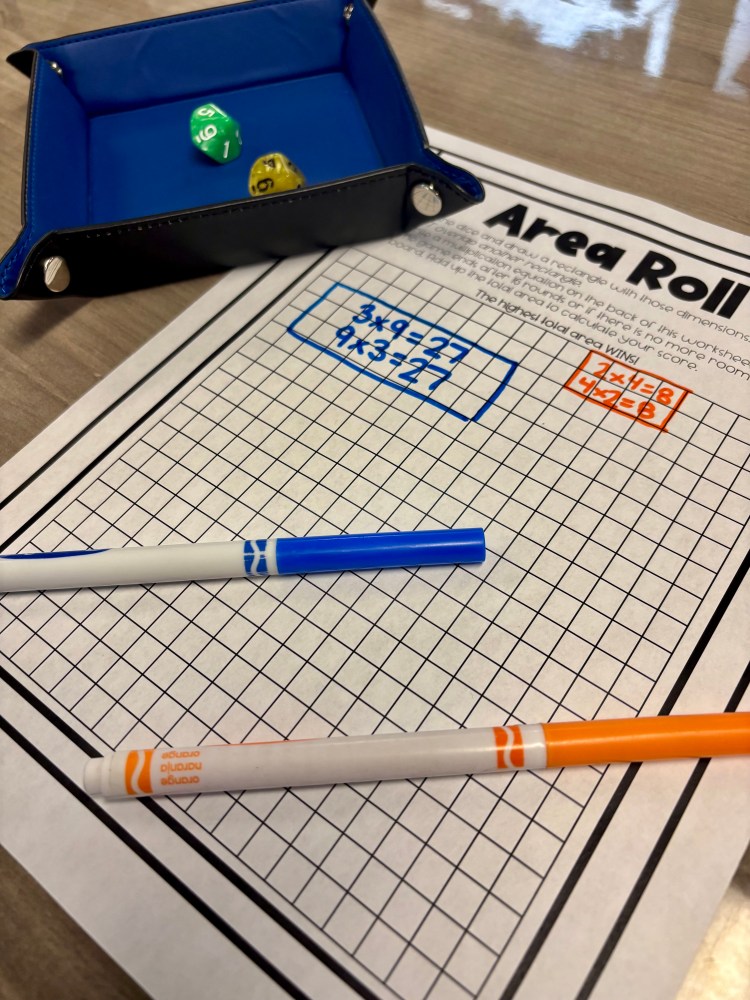
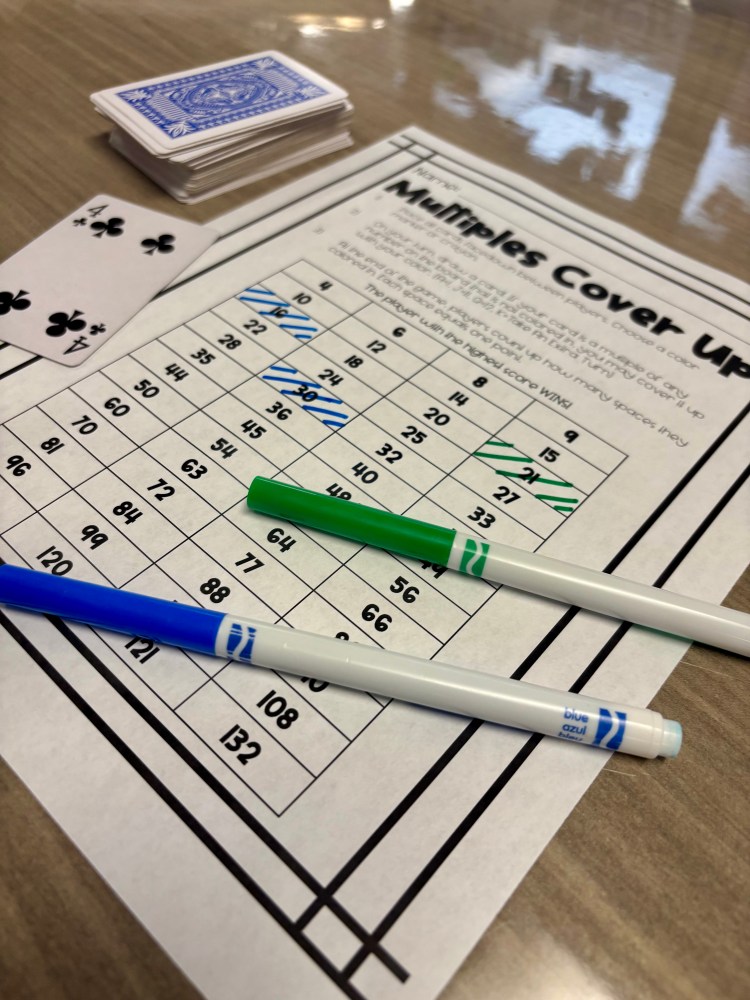
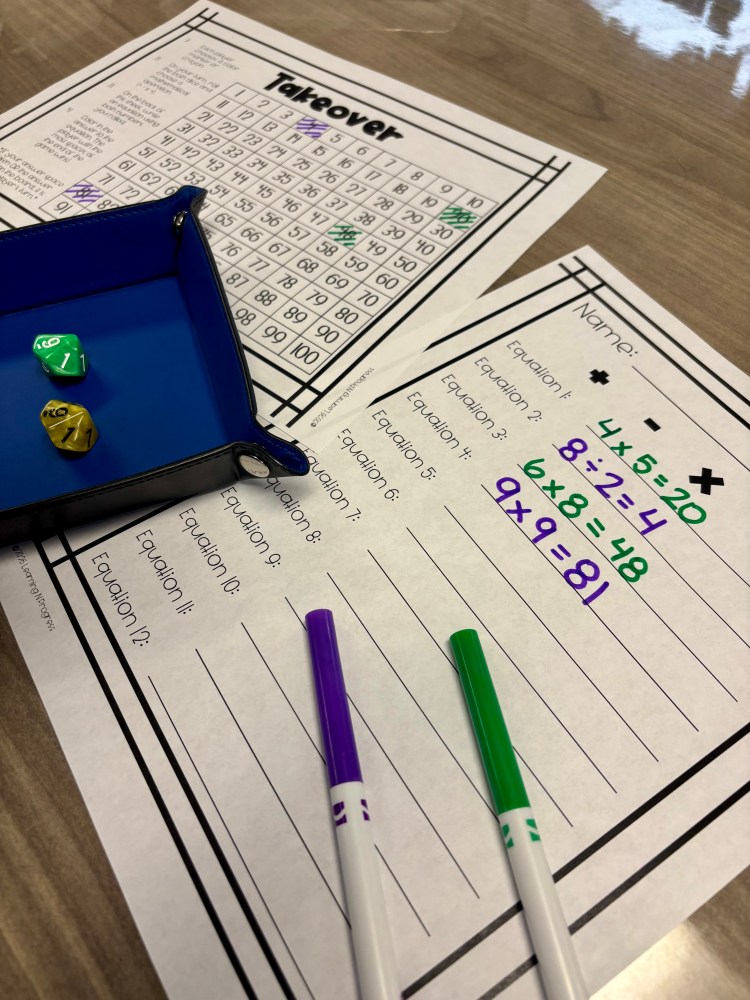
Memorization is not for everyone, but there are ways to get students to make progress on their math fluency. Play math games! Every day, when my students walk into class, they immidiately start practicing their math facts. (And no, it is not a worksheet.) They play one of my many morning work games where they are asked to practice addition, subtraction, multiplication, and division. Some games allow students to practice all four operations, while others focus on one specific operation. All of the games below are included in my Morning Work Math Games for Upper Grades, Halloween Math Games for Upper Grades, or the Halloween Math Games for Primary Grades.
That was quite a bit of information, but every fire starts with a single spark! I truly hope that you will join me and be part of the change. Math should be fun, engaging, and accessible, and with some of these mindset shift, we can make that happen.
Next time, we will specifically look into differentiating games. Trust me, you don’t want to miss it! Until we chat again, try at least one idea shared today and remember as always, to keep learning!
